Showing posts with label Problems. Show all posts

29 Feb 2012

Why India must work on its Foreign Policy

Given the status that India currently enjoys in the diplomatic world, it is only natural that India be required to make tough decisions.
The diplomatic power of a country can be analysed by simply taking together factors that act for and against the state at the international level and the state's ability to work out a plan to balance out the negatives that it may face. United States can be considered to be a country that is more or less able to balance out the negatives at the international level (recent 'stand-off' with Russia and China on the Syria and Iran issue can be considered to be a negative that it hasn't balanced out in the UN). 

If we look at India under the same lens, then a couple of inconsistencies do crop up which are common in countries which are still developing their diplomatic power (i.e focus more on the soft power). One of the major  problems that the current foreign policy of India has is the inability to move out of the neutrality sphere. 

After the end of the Cold War, the diplomatic world underwent a period of 'secondary power vacuum' wherein, the west was able to take major decisions without being challenged in a manner that would threaten its dominance in the diplomatic world. Yet soon countries like Russia, China and India caught up and three together are no able to form a major opposition to the west at the international level.

Thus while the three are able to form a formidable opposition, India's foreign policy still hasn't evolved enough to take a stand with one side and through out the course of the event remain on the same side. One of the major example of this would be the recent decision by the Indian government to send a diplomat to attend the Friends of Syria meet which is considered to be an anti-Assad and a pro-change forum. This decision has certainly raised a few eyebrows towards the effectiveness of the Indian bureaucracy and government in formulating a foreign policy meant for the long term.

While at the same time, this can be considered to a successful practice by India of its principle-based foreign policy. However such a practice cannot be considered to be an exactly ideal path to follow at the international level and thus a certain reworking of the foreign policy is in order as India tries to analyse the pro-cons of its relationship with various countries in this every changing world.

30 Oct 2011

Right to Recall: Step towards better governance or disorder?

Recently media's favourite Gandhi topi boy started off a discussion on electoral reforms. Yes I am talking about Mr. Anna Hazare who has enjoyed a lot more than the supposed 'fair-share' of the lime-light. He has talked about getting rid off corruption and also Congress to put it frankly. But now he has taken up the topic of electoral reforms. This topic as good as it may sound does not quite ring a bell with many people. There have been many attempts through out history to make elections better and fairer but most of them have failed and there are many reasons that can be attributed to this failure. But none of them would have managed to influence these reforms so much so that they end up being failures, unless and until they did not have people behind them.

Electoral Reforms basically aim at ensuring that the people get their 'money's worth'. Some of the electoral reforms that Mr. Hazare has been so overwhelmingly talking about are The Right to Recall and The Right to Reject. These rights have been tried out by many nations and in most of the cases, there has been a gross misuse of them. But why does it so happen? The reason is fairly simple to decipher. A democratic country functions on the simple concept of people choosing their representatives and ensuring that they work for them. My statement is ensured by elections which happen both for the purpose of electing representatives and also for throwing them out. History has repeatedly proven my latter statement to be true.

Governments have repeatedly fallen and so have representatives for the simple reason that their policies failed to bring about the result desired by the electorate. And that is how a democracy should and must function. So then what is Mr. Hazare trying to say by bringing up these issues of Right to Recall and Right to Reject. According to him, he would like the electorate to enjoy the option of having a Right to Recall. What is Right to Recall? Right to Recall is a constitutional right that can be given to citizens of an electorate so as to recall their representative and hold a new election to elect a new representative. In short it is basically removing a representative from office before the regular elections and then holding an election to get a new representative.

It is done by holding a signature campaign/election of sorts where in if around 30% (number varies, it is 5% in some countries) of the people sign the campaign to recall the minister than a new election is held and in this new election, the people have the option of either continuing with the present minister or voting for someone new. Thus in short it is a long and tiresome process and not to leave out the expenses part of it. A process like this though is called the epitome of democracy is meant for developed countries with adequate funds to spare and an electorate which is educated in political matters and thus not influenced a lot by ideological leanings, religion, place etc.

Electoral exercises like these should only be seen as a very distant dream in a country like ours for the simple reason that we haven't reduced poverty to below 5%. It is amusing to see people talk about this exercise with such fervor while at the same time it is this group of people who strong arm the government on issues of inflation, which is affecting the poor sections of society terribly, and poverty which according to them is simple an example of the government failing to do what it was meant to do.

Hence with so many problems like inflation and poverty already in front of us, it would only be a Koalemos' dream to have such a huge project implemented in India without even understanding and taking care of various other problems like poverty and a politically illiterate majority. Thus this is nothing but a desire to ape the west (a term that I am personally against) without taking an appropriate look at the real situations that affect the electorate in their daily routine.

17 Jul 2011

The Time After The Blast

A couple of days ago, a tragedy struck us. Three blasts rocked Mumbai and with it also the country. Nothing could be done about it. News channels aired their favourite 'Are you safe?' programs while papers came up with ridiculous headlines which instead of showing sympathy and support to the victims commercialised their agony. Ministers claimed that it wasn't a failure of intelligence, some questioned that claim while the others simple said that during their rule the number of such incidences were limited and advocated a zero tolerance policy for Terrorism. It didn't bother me what people had to say about the incident. What bothered me was what they did about it and how they helped the people in need.

      I am very happy to say that I wasn't disappointed as the human spirit awoke as the news about the blast spread and people offered their help to the stranded. Social networking sites were full of offers to people to give them a ride home, offering a place to stay and people even from the overseas tweeted to the stranded telling them that they would call the folks of the stranded due to the mobile network being down and all. Nothing more could have been done to show how united the people were. The terrorists only succeeded in revoking those sentiments of unity and sympathy which were not seen on the faces of news anchors as they went into commercial break after having had a chat with their correspondents on the death toll.

      The topic #mumbaiblasts became a worldwide trending topic on Twitter for a couple of hours while tags such as #offer2help came up as people tagged their offers of help and sent around a message to the masses. Some of the stranded responded to the tweets and they were taken care of. People took out their cars and drove up long distances only to help a person stranded at a temple reach home. This simple act of kindness gave me an absolutely strange feeling as I looked on in delight as offers to help flowed.

      The common Indian politics started soon after with many a people blaming certain communities for the tragedy that struck us all. This one thing infuriated me the most and I lashed out at those who were trying to incite communal hatred. Of course they had their own reasons which they childishly tried to prove right in front of us as me and a couple of my friends questioned the very logic behind each of them and proved them wrong. Many a friends of mine on Twitter asked me to not respond to them but then I couldn't help it and gave the irritants a piece of my mind. However trolling continued.

Source
      Even as the twitterati offered help, news channels went from celebrity to celebrity asking for their opinion on the blast. That according to me was very immature as no person with a rational mind set would support blasts aimed at civilians and true to rationality all condemned the blasts and offered their condolences and sympathy. One thing that did strike me was that the very next day, the city came to a halt quite to the delight of the terrorists whose aim of bringing the city to a stop had been fulfilled. Roads remained empty and offices, schools and colleges recorded the lowest attendance ever. However I did go to college.

      Even as I entered the college there was an eerie feeling. Two souls looked at me as I showed the watchmen my ID and entered the campus. The basketball court was deserted quite unlike normal days when it has people playing and at times talking to each other in groups. Rain poured down as I traced my steps to my lecture room. It seemed like silence had indeed invaded the place. A teacher replied, when asked why the college hadn't declared a holiday stating that the Principal thought that by declaring a holiday they would only be ensuring that the terrorists get what they want i.e. the ability to bring fear into our minds. I sat in my class and talked to five students out of a class of hundred who were present. Only one lecture took place that day.

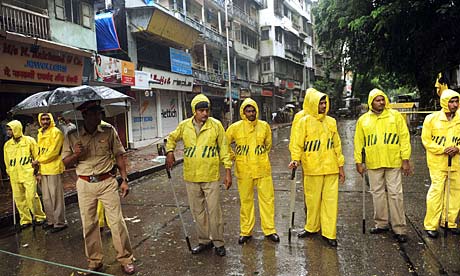
      What my principle said was indeed true. These acts of bombings had always been meant to bring fear into the minds of the people. Even as leaders visited the victims and talked policy, the roads remained empty. The crows circled the sky as cops wearing raincoats stood at various points eyeing each and everyone who passed them. The terrorists would be caught shortly but what would happen? They would be given a 'free and fair' trial and then they would stay in prison courtesy the Government of India. Next day the city returned to normal as cars honked at each other and students responded with a 'present' to the attendance call. Nothing should ever break this spirit of our again like the way it was broken on that day for till we are here we must refuse to bow our heads to terrorism.

10 Jul 2011

Taxing Religious Institutions in India

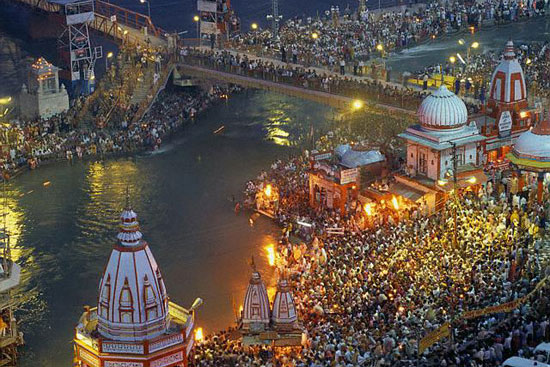
For long the government of India has followed a policy of providing subsidies for religious events be it the Haj or be it the Kumbh Mela. For the Kumbh Mela it is more about providing the infrastructure but its the same thing. Recently while reading a blog, I read that every year the govt of India spends more then Rs 600 crore as Haj subsidies. That is so not good. Its vote bank politics at play, a very common thing in India but not a good thing. And if we take a look at the Kumbh Mela then it is a lot more considering the amount of infrastructure the government builds for the event. So all in all is this an unnecessary waste of our hard earned tax money?


Source
      There is no clear majority on this as some people say that it is a waste while the others support these subsidies and in fact have even urged the government to increase them. I for one am against them. What I believe is that in case of the Haj, the Muslim law states that each person must complete this journey to Haj on his own and using his own resources. Thus to many Muslims this subsidy that the government provides is insulting as it is against that law and I support them if they feel so. Because if such a journey has to be made, then to keep it pure, the individual must exclusively use his own resources and not depend on others. 


      In case of the Kumbh Mela or Amarnath Yatra for that matter. I feel that the government should not heavily invest in infrastructure for short term events like these as they happen at one place and then at another. Thus there is no productivity in it. Besides I feel that the amount of money that the government has spent on such holy pilgrimages would have been enough to develop another Bandra-Worli sea link located in Mumbai and a lot more. But that hasn't been done. The money that the tax-payers earn after having slogged in whether it is their office or in their shops or any place for that matter is being used for this. Of course, if one talks about security then yes, the state must take care of the security issues but that must be the only expenditure made by the state in this regard. The infrastructure that needs to be developed must be developed by the religious bodies which organise these events as they are after all religious institutions established to aid and help every devotee and individual to make their respective pilgrimages. They must not act like profit guzzling private sector institutions.


Source
      Another thing that I'd like to talk about would be the Taxation Policy of the Government of India in regards to Religion which states that all organisations set up for religious purpouses shall be exempt from taxation. I do not agree with this clause that is there in the India Tax Act, 1961. What I do not understand is why is it that common people like me and you who work hard and do some good with it are taxed and while religious institutions which hardly ever function to do what is demanded of them are not taxed. If you look at it from a numerical point of you then I can say that the religious institutions are the richest in the country. The best example is a temple which has got gold ornaments for the god that resides in that temple. Thus it is quite foolish to tax us who have limited income and not them who have an unlimited income.


      Of course some people might raise the point that religious institutions are many a times charitable in their deeds. They open up schools and hospitals but I would like to ask if whether it is certain that all do that? And if the money from their charitable endeavours if I may say so ever even reaches the needy. If they are engaging in charitable activities and if that has been verified by the government then it is good, they should be given some tax benefit. But while talking about religion and charity, I can't help but bring up the topic of a recently deceased 'saint' who was supposed to be engaged in charitable activities and how his death resulted in a major public figure being caught crying on camera but what I really mean to say over here is that even though he may have been indulging in charitable activities but then why are trucks being ceased with millions of rupees going out from the city of his residence?


      Is there something else that we are not seeing that is there in all of this tamasha, if I may label it that. I won't get into whether there was something more or not for the simple fact that there is nothing to explain. The picture is crystal clear. Something was going on if truck loads of money is being transported from one place to another. However what I would like to point out is that according to the India Tax Act, 1961, all anonymous donations can be taxed till the marginal rate of 30%. And if the income is about 5% of the total income of the institution then it may not be taxed. I think that it is a rather surprising clause.

      It is common sense that if a person wants to convert black money into white money then he will donate it to some institution specifically religious or charitable and then cut a deal with the owner and he will get his money white and part of it will go into the pocket of the chairperson or owner of the institution. And not to forget that what I mentioned above is not application to places of worship like temples, churches or mosques. Thus I think it is a loophole that can be easily exploited. Religious institutions however sacred they are must never interfere with the functioning of the state but yet at the same time they must pay their dues (taxes) like any institution located in the state. People may say that if they are being taxed then they have a right to their opinion and all but according to me religious institutions with huge followings should not make any statements regarding the administration of the state or the policies followed by the state for the simple reason that even they may have meant it in goodwill but people in trying to implement that 'goodwill' might not remain within the civil boundaries that the constitutions marks for the citizens of the country.

Source
      And the last point that I would like to raise is about the recent treasure worth Rs 1000 lakh crore or about $22 Billion which was found in a temple in Kerala and the ongoing debate regarding the ownership of the treasure. Many devotees have said that the treasure belongs to the temple but I would like to ask them what use is treasure to a temple? Gods have always been against materialistic desires and thus speaking from a devotee's point of view I think that it is an insult to them. And another thing is that even though the treasure was found in the temple but it belongs to the people of India and thus the government should at the most give the temple the founder's share or 10% of the total worth of the treasure which is not a small amount and the treasure should be hosted museums because it is the property of the people. Now if people start questioning ownership on the basis of religion then I will like to remind them that many Hindus like me are not in favour of a treasure being kept in a place as sacred as a temple and the treasure also belongs to us and thus it is public property and hence should be housed in a museum.

      Thus all in all, religion and money are not a good combination although they are a dominant combination for the simple reason being that religion no matter what it is was always meant to be sacred and pure and this introduction of money into the sphere of religion has spoilt that purity that it enjoyed previously while at the same time giving rise to corruption and if I may say insuring that the government losses money. Thus money and religion should be kept separate otherwise there will not be difference between them and the profit-making private institutions. In the end, I would like to just say that this article was not meant to criticise anybody and that it was only meant to shed some light on many facts that people are not aware of. Hence this article should not be taken in the wrong sense.

12 Jun 2011

Justifying the crackdown at Ramlila Ground

      On June 4th as the clock ticked form 11:59 PM to 12:00 AM the Delhi Police stationed itself at the Ramlila Maidan. What was to follow was to be dubbed as one of the worst incidents ever to happen in a democracy like India. Allegations were made against the government. People warned that we were returning to the Emergency Era. The Delhi Police had raided the maidan, many protesters were injured and Baba Ramdev was taken to Dehradun. 

      The crackdown received criticism far and wide. BJP President Nitin Gadkari said, "Home Minister P Chidamabaram has replaced General Dyer who had massacred peaceful agitators in Jallianwala Bagh during the freedom struggle". LK Advani termed this police crackdown as "naked-fascism". Human Rights groups demanded answers from the government.
Source

      All in all the government was cornered but not even for a moment did anybody think about all of this from the government's point of view. Maybe it was the sudden excitement that people found themselves surrounded by or maybe it was the collective anger that people had for the government. Nobody was happy. Rising prices, corruption and what not. Something had to give. And thus the government found itself to be a lone woodcutter in the forest, surrounded by hyenas ready to tear apart the woodcutter. 

      I admit that the crackdown may have been a little too harsh but it was what was needed. I believe that the constitution grants the government the right to crackdown on such protests if it feels that it may disrupt civil peace or cause civil unrest. I feel what the government did was totally justified. If you come to think of it all, if any damage had been done to public property had the protest gone out of hand thenn who would have had to pay for it? We would have had to pay for it from our pockets. Our taxes would have been used to pay for it all and I for one refuse that my money be used to pay for damage caused because of a Baba whose total net worth is over a 1000crore Rupees. 

      Another argument that the people raise is that 'Women and children were harmed'. I find this argument to be the dumbest of them all. Doesn't everybody go about claiming that women and men are equal? So why this special reference to women alone. It's a bit strange now that I look at it carefully. And the children. It is unfortunate if any children were hurt but at the same time only the parents are to be blamed. I have to still meet a single parent who would take their child along to such a place when they know that the issue is going to get very political. Of course many would defend the parent's action by saying that the parents took the child because their future was at stake. OK fine if at all the future of their child was at stake even then I would say that not a single person I know would take their child to such a place. They would go themselves but not a single parent would allow any harm to come to their child.

      After the crackdown, we saw BJP protesting against it. A clip of Sushma Swaraj was being aired by news channels which showed her dancing to supposed patriotic tunes at Rajghat. She defended herself aggressively by asking whether it was a crime to dance and sing patriotic songs at a place like Rajghat where the father of our nation was cremated. Even if we allow patriotic songs but still dancing at a place like that is condemnable. That is a place where one should remain silent and show his respect for Bapu. And however much you claim that you were simply singing and dancing to songs in praise of the motherland, it does not explain why you had the urge to dance to whatever patriotic song that you were dancing to at Rajghat. There is a time and place for everything. I for one regard it as a clear cut insult to me and to every Indian because of the special place that Bapu holds in our society.

Source
      Many critics of the government compared the India under UPA to China. I for one find this comparison both silly and childish. It is strange that people are able to criticise the government like that and still say that they are living in China. I really doubt if in China people are even seen or heard of after they have made such a statement against the government. Comparing this incident to the Tienanmen Square protest or to the Tahrir Square protests is nothing but an insult to those protesters who bravely fought their regimes in the hopes of having a better tomorrow. I don't think that this crackdown evoked any feeling of being that helpless that one compares it to the those valiant protests that happened in China and Egypt respectively. People claimed that all the politicians had Swiss bank accounts. That statement too is dumb. Did they go and get the bank statement of those individuals? Why do people insult politicians just like that? Agreed that politicians are public servants but still you do not own them. Our democracy can be best described as a restaurant where the Prime Minister is the waiter and he has to come at one call as soon as he is summoned by any Tom, Dick and Harry. What the people do not understand is that he has got much more important things to attend to like administrating this huge country of ours.

      One of the many factors that makes me critical of Baba Ramdev's protest is the fact that the man travels in private jets even though he has taken sanyas. This one thing alone makes me not want to believe whatever he says. Besides, what is left of a fast after you have taken some honey and lemon juice? Also not to forget all this fasting was like holding the government to ransom. I for one wonder what would happen if an unstable person tomorrow undertakes a fast saying the government must bomb some country for all the atrocities that it is committing on India by means of terrorism. If the fast gets good publicity then many idiots would also join the protest. At that time a crackdown would be needed. We can't simply bomb a country and then hope that they won't nuke us.

      This fasting incident made my Grandma nostalgic. She told me that when she lived in West Bengal, almost every single day there would be a strike or a fasting by a group of workers wanting a rise in salary. They claimed that they were being made to work a lot and not being a paid a fair amount. What was the result? At times when the strike would go on, the company would go bankrupt and shut down. Hence all of them would lose their jobs while the Union Leaders were taken care of by political parties with vested interests. A similar thing is happening in India. Every single day somebody goes on a fast for some issue or the other. He is endorsed by celebrities who at times simply fail to understand the fact that adding their name to such a campaign would have a broad effect and many people would join in the fasting without actually being aware of what the core issue is.

      Thus all in all, promoting such things is not going to be beneficial to anybody despite whatever people may claim. I hope this article succeeded in telling you guys that if you want to protest against something then fasting is not the way to go. You can do rallies. Sit at the pavements and shout slogans, protest. But this thing of holding mass protest is not good. It won't do the country any good. Police forces would be diverted to ensure that these protests don't turn violent or to ensure the safety of the leaders from things like ensuring the security of the common man, terrorism and robberies. So even though the constitution grants us the right to protest but it is up to us to understand, be reasonable and to protests in a way that does not hurt the economy, administration or anything for that matter. If we are to all grow old together in this great country of ours then we must find ways to let out our anger against the government in respectable and acceptable ways.

5 Jun 2011

Education...Nah! Tuitions...Yeah!

Guess who topped the twelfth grade exams?
  1. The student who had his hand up with a well-thought intelligent answer in class! 
  2. The student who was not seen or heard in class.
      You are forgiven for making the mistake selecting option 1 because we are talking about the Indian Education System. What should a developed education system lay emphasis on? The child's all round development but in India the education system is meant to lay emphasis on studies and studies alone. Studies are emphasized regardless of the fact whether the child is interested in the subject at hand or not.

      In the exams, the child who is always active in class, answers questions and is recognised by the teachers as a good student gets average marks while students who are not heard of manage to get excellent marks because the examiners give marks only to the answers which are good enough to be introduced in any guide. They do not see whether the child has understood the fact or simply mugged the answers.

      I am not ridiculing the entire tuition system. I understand that at times tuitions are needed for subjects like Maths and even for languages that you haven't learnt before like French or Russian but I don't understand the logic behind having tuitions for subjects like Political Science or Psychology. Is there a need? No student can be so dumb that they won't understand what is being taught in the class in the above subjects.

      What I don't stand for is that you go to college and then go for tuitions mug those huge answers that are given by your coaching classes and then just print them out on your examination sheet word to word and then end up topping the exams. I know many people who didn't take tuition and who got average marks and I also know people who took tuitions and got good marks. It is upto you to decide who to respect. I respect the one who didn't take tuitions and got average marks. They are the ones who will do well in abroad where there are is no tuition system. So for all those who didn't take tuitions, you did better than the rest.

29 May 2011

Psychology of Views and Decisions

      What is the routine that you wake up every morning to follow? I bet it involves reading the newspapers. Sure it does. What are you nodding your head for? OK? So you open the papers and what is the first news that you read? Killings, rape and violence. In simpler words it is all the things that the world would be better without and also that you would be better without every morning. After all it is much better to wake up every morning to read happier things. But do the papers realise that? I don't think so.

Source
      Regularly they feature events that are not so pleasant to either the eye or the emotions on the front page and we like the silent people read them, go through them and the worse it is the better. At times it seems like we have been taken over by a sinister evil that wishes to see all the gory details so brilliantly highlighted in the newspapers. We do not have any control over it.

      But how did it grow so big in the first place that even our superior organs like the brain can't overcome him? Well it is simple now that you ask. It has grown. All the rubbish that we fed it acted like nutrients for it and it bloomed. There are few things in this world and life that we can do.

      And it is these things that we do that define us. Also there are those things that we don't do that define us. As such we are surrounded by options, options good or bad. However what we need to look at is: what is it that we have done and or will do and what would their consequences be? Can they be put into the 'good' circle or the 'bad' circle.

      Whatever we do may not have its effects immediately but it will in the future, you can be sure about that. Thus every time we do something or decide to do something just give it a second's thought and view all the paradigms attached to it. That is all you need to do to lead a good life. Once you have analysed everything, you will choose the right option automatically.

29 Jan 2011

A New Republic For India

      Parliamentary Democracy has been the form of governance in India for the last 61 years, a long time. This has been a long and a rather successful experiment if not an expensive and at times not the most effective. However I feel that the time has come for India to experiment with its Republic. Touch wood, parliamentary democracy has been successful for India with hardly a few incidences such as the one where Indira Gandhi issued the National Emergency, for some people it was dictatorship but for some it was an improvement in the way the system worked. I won't dwell on what it was or what it wasn't or what we couldn't achieve as all this is nothing but what I think and it won't give any solid results. Hence all that we can do is speculate.

       The best example that we can look at and maybe copy is that of France. France has done all sorts of governmental experiments. It has experienced a King, Constitutional Monarchy, Parliamentary Democracy and a Presidential Republic. India needs to remain true to its democratic value which it so often shows off to the rest of the world. Thus the best that India can get would be a Presidential Republic, something similar to USA. But would it be suitable?

      India at present is experiencing what experts may call as the coalition era. It is the time when a democracy has matured and all sections of society are represented at the political level. Thus there is an abundance of political options and alternatives. But this abundance has also taken its toll on the country. And that is the ineffectiveness of the Political System of the country. Parliamentary Democracy involves direct elections. Thus many a different political parties and candidates get elected resulting in no clear majority for a single party which in turn gives rise to the spirit of political 'co-operation'. Everybody wants to be in power. Thus political parties come together to form the government.

      At times this government has a lot more than two political parties involved to get it running which results in parties balancing their positions so as to not offend a member party because if they do so there might be a back clash. The offended party may take away its support resulting in political imbalance and at times resulting in the fall of the government. And we have a new election which results in the same event being repeated again and again.

      A diverse country like India is bound to have a population which is divided on different things. Nothing much can be done about this political imbalance. Only political parties can work harder not caring about their political results but about the economic and regional impact a decision that they take might have. Governments which work for the people never fall but those which work for themselves always fall and we have seen this being repeated again and again. Whenever a government fails to do its job and work efficiently for the people, it losses the next general elections to the opposition.

       Thus it is time that India decided on another form of governance. According to me the a federal government based on the similar lines of USA would be the best. But as I said this is my opinion and others are entitled to theirs. All I want to say is that its time that we get a change from this parliamentary form of democracy.

23 Oct 2010

Indian Political System

There are many advantages and disadvantages of being in a democracy. The advantage is that many a times you get to listen to and follow a leader who is actually concerned with the development of the country and other times we have to listen to leaders who do nothing except divide the country or raise trivial topics which have no place in the life of an individual while at times these very same political parties and people come out with policies and opinions that encroach on the people’s rights.

Recently we had political parties condemning a book and its subsequent removal from the university syllabus. Of course it’s a clear case of encroaching upon the rights of the people. They could have simple censored the things that they didn’t find appropriate but they should not have removed it. People should have the right to read it or not to. The decision should have been left to the people regarding this. All I can say that such tactics are nothing but publicity stunts. Politics should be left out of academics. There is no place for politics in education.

We even have political parties who actually care for the people but of course those are rare cases. Recently a WB (World Bank) report showed that the conditions in Bihar had improved considerably. It’s a good thing that the least developed states are coming up and we are all happy about it. This can be said to a case of good administration and good governance.

We even have parties who follow the infamous British policy of divide and rule and they are successful to some extent. They divide the people by telling them about how people from other states are coming and taking their jobs et al. But by doing all this they are forgetting one important concept and that is that even though the majority of the well-off educated people don’t vote but the youngsters who are coming up and voicing their opinions certainly do not support them. It is the people’s fundamental right to move around anywhere in the country and to get a job in any part of the country.

We even have political parties that contest elections on the basis of caste. This can be said to be similar to the divide and rule policy but here they divide on the basis of caste. North India is a clear example of this where one politician decides to install statues of herself and other people and uses the tax-payers money to fund it. This is a blatant misuse of power and strict actions need to be taken to prevent such acts which do nothing but showcase the divide and rule policy that the minister is using.

There is not much that we can do about because it is we who brought these people to power but it is also us who can show them the door for good if they misuse or do not match the expectations of the people. We all blog about such things but what do we really do. How many of us go to vote? Ask this question to yourself. Well I for one have decided that as soon as I turn 18 and there is an elections I will use this fundamental right which is also a fundamental duty to select an individual on the basis of his own track record and not on the basis of his political party’s.

We can even contest elections but the major thing is that we won’t be able to get that support due to lack of funds. Money certainly plays an important role in electoral politics. That is a major problem in a democracy. Good people rarely get that required support whereas other Tom, Dick and Harry’s have an abundance of it. I feel democracy fails in this respect.

Although the agenda of these political parties is pretty clear and that is dynastic succession. It can be good and can be bad, it depends upon that individual. In some cases it is good as the successor is well aware of his duties to the electorate and many a times he does the right job. But those sometimes when they are worse than their ancestor really make us question the logic behind having such a political system.

We have a political system where an individual can use diverse trump cards (another problem in a democracy) such as that of caste, religion, regionalism and linguism. Such cards threaten the very existence of a democratic society like India where people will get easily get elected using these trump cards. The election commission has to take a strong action and make stricter rules regarding the use of such trump cards by political parties.

All the time we blame the system for the pains and problems that we have to go through and why not that’s the closest thing that can be related to us. Because we are the system, if we can make somebody big we can also cause his fall. The only solution for this political problem is more awareness among the people regarding their fundamental rights and their fundamental duties. Even if people became a little more aware the system would itself correct itself.

But as they say, an idiot can remain in power only if he ensures that nobody else becomes smarter than him. And our very own Indian political system proves this principle a little too well. With the citizens acting like the three monkeys of Gandhi and allowing everything to pass by and not raising any noise about anything that they feel is simple not right.

But as people have always said and will keep on saying there is always a ray of light at the end of the tunnel and in this case also this principle holds true. The ray of light is education. With more and more people becoming educated and aware about their fundamental rights and not only rights but even their fundamental duties. So all I can say is that with more and more youngsters raising their voices, I think the political parties will find it a little hard to fend for themselves if they do not respect the wishes and ambitions of the people. 

19 Jul 2010

Teach What is Relevant

Education is something that teaches a person the necessary things that are required for him to get a job. Example if a person wants to join NASA then he has to know physics. But what is the use if he is being taught something that is of no use to him. He is being taught psychology which as a programmer would be of no use to him. So its a waste of time isn't it. Instead of psychology he can be taught something better.

I'll give another example. A student is given a choice of subjects after passing 12. If he wants to take Economics. Then the best subjects for him would be Maths and Statistics but maths and stats are in the same group so he has to chose only one of them and in the third group there are subjects which won't be a lot of help to him. But yet they are there.

This type of education is bad for the country. One must study to get a hang on the things that would be necessary for the type of job he wants. That will make the student more efficient. These types of problems cripple the education system. However, the current government has showed the resolve to change it. We do not know whether there will be a major change or not or will the education system head for the best or worst. But the thing that we can do is. Create awareness. That is all we can do and awareness in turn will force the government to change the policies for the better.

29 Jun 2010

The Cyber Wars

Internet is now a national asset. It has helped in connecting people and also in a lot more things. But as they say, there is always another side to things. And yes indeed there is. Along with the pros of the internet come the cons. But these two elements are there in everything. In some cases the pros are more and in some it’s the other way round. But this here is a unique case.

Internet has had a lot more than its 15 minutes of fame and it is still on it. Internet here is a unique case of how something can be so good and yet so bad. The threat that comes with internet is something major. Something so major that it threatens the entire world as now a days many things are computerised if not all.

Recently the bill ‘Protecting Cyberspace as a National Asset’ which was approved unanimously by the US Homeland Security Committee attracted some negative attention with people raising concerns over their privacy on the net. This bill will give the US president the authority to ‘kill the internet’. Some claim it to be the President’s ‘Internet Kill Switch’. This bill would be put to vote on the Senate floor shortly. But it has brought forth the major problems of the net to the public.

The problem is Hacking and identity thefts. These problems are a relatively new thing. Last year and even this year we read many news reports about the hackings that were taking place with the main source being China. Reports claimed that China had its own Cyber Hacking Army. I do not know whether I should believe it or not but the recent hacking carried out from the Chinese Territories gives me reason to believe so.

Many countries have built their own Cyber Army with the US and China leading the pack. But the thing to note is that this might result in the onset of new types of wars, the wars which will involve no bloodshed. They would be called ‘The Cyber Wars’ where one country would hack into the other country’s confidential database and take out information that is of interest or paralyse the entire internet facility within that country.

The worst of these attacks is called ‘A Fire sale’ wherein everything within a country is hacked and rendered useless or paralysed or even controlled. It is best shown in the movie Die Hard 4.0 where the cyber infrastructure of the United States is hacked and controlled by the terrorists. In such a situation, everything in the country that is computerised is controlled by the hackers. And that involved the Traffic Signals which are now days are controlled by computers. Furthermore the entire internet infrastructure can be paralysed which means that people will not have access to the internet.

Then the hackers can get on with damaging the economy as many of the economic activities are carried out via the internet. This may result in losses of over a Billion and more and at times might lead to the worst and that is another Great Depression. Another aspect is the mass media which is by far one of the most important. If they have control over the mass-media then they will have control over what we are seeing. The TV shows and all would be controlled by them. They will show us what they want to show and we will be seeing it.

Seeing the above scenarios it does not come as a big surprise if many more countries adopt laws which control or monitor the internet. But a problem with the internet being controlled or monitor would be the complete loss of privacy. The government would have the right to control the things that we do when on the net. In some of the less democratic countries it might lead to Government tyranny. The government would block access to sites which criticizes them or which it does not feel is appropriate for the internet community to view. And this has already happened in many countries example China and is happening in countries example Pakistan where sites like Facebook and YouTube were blocked for sometime as they were deemed to be immoral.

Thus there are two sides to everything. These two sides prevent us from coming to firm conclusions to such issues. At one hand is the security and on the other is privacy. Thus we are on the tip of a mountain and it would be are decision which would either lead us to a new world or to doom. But the thing to note is that both the decisions are sensible. I being a netizen prefer security but also being a blogger makes me want to choose the right to expression. But whatever is done should not be done to the extreme. As taking any decision and going to the extreme will cause both unhappiness and dissatisfaction.

11 Jun 2010

The Complicated Indo-Sino Relationship Part I

India and China are the most important nations of the 21st century. They are the rising superpowers. But both have their own respective problems that pull them down. Both these nations will have a powerful say in the world affairs sooner than later. It is already happening. The recent Copenhagen Summit where India helped China in getting a good and fair deal. Such incidents are increasing, where both these nations have taken surprising steps sometimes supporting each other and sometimes against each other. This is what makes the Indo-Sino Relationship so complicated.

Both these countries have a history. There is a lot of mistrust between the two countries which is evident from the fact that they don't trust each other and always view each other with suspicion. This all started due to the 1961 war, when India and China were at war with each other. There are many versions as to why the war was fought but somewhere down the line it is clearly visible that these two nations are a little vary while dealing with each other which has resulted in centuries of mistrust. But why so?

The main reason for all this lies in economics and foreign affairs. Both these countries are going to be superpowers sooner than later and like all the countries in the world, they also would have some differences in opinions regarding various matters. This is quite the case here. Both these countries have huge differences in opinion. Lets take Pakistan for example, China is considered to be an ally of Pakistan which is quite true. China has always supported Pakistan in many of its "misadventures" be it the nuclear weapons race or preventing sanctions. India on the other hand is considered to be an arch-rival of Pakistan. This assumption is mainly based on India's stand on various issues which are sometimes against Pakistan but India has also supported Pakistan, but that is a different story all together. The fact is  that this varied opinion is a major problem in improving the relation between the two nations(India and China).

Another factor is the race. The race for  supremacy which I believe is very much the main problem. Both these countries want to outdo each other in every field. India wants a UNSC seat which I believe is very much India's right because India does not have a big brother(like China for Pakistan and USA for Israel) with a UNSC and besides it has earned. India is the most powerful country in the Indian subcontinent. This is a major problem for China because as long as China has a hold on that seat it will be a big brother type figure in Asia but with another asian country also getting that seat, the big brother image is bound to take a beating and so will its influence.

But this was all about the negatives shared by the two countries. Positives are also there. Both these countries have realised that though they may be powerful nation but it is still not enough to overcome the US supremacy. This resulted in the two forming an alliance of sorts at the Copenhagen to get the result that they both wanted. This played the trick. India and China are so powerful nations that when together even the US can't impose its policies and ideals on them. The duo agree on many matters like terrorism. But this is still not enough. A lot more should be done to improve the relations.

India recently gifted a replica of Sanchi Stupa to China. Such acts are the most welcomes as they help in improving relations between the two countries. This improvement in relations might lead to a new era of diplomacy wherein both India and China to help and support each other in their own various endeavours. The time has come when these two nations will join hands and change the vary face of International Politics.

TO BE CONTINUED....

THIS POSTS CELEBRATES THE IMPROVEMENTS IN THE INDO-CHINESE RELATIONSHIP.

1 Jun 2010

We are not Alone

For ages man has wondered whether he is alone in this vast universe which has over a billion stars. Numerous science-fiction movies have been made on small green men from mars. But that might be a reality sooner than later. Nasa has claimed of having found compelling evidence of life on mars.

          They have reportedly found a form of pond scum which is the building block of life. This could be a turning point in Human History. There are more than a billion possibilities at the moment and there a billion answers to the billion questions which are being raised about mars.

          If aliens are indeed found which will take some time, it would have a significant impact on the very foundations of Space Science. Aliens are a topic of controversy. It will be exciting to see the reaction of the people, if it is proved that there are aliens.

          We should be careful when dealing with aliens. If we ever find them, they might be an advanced species with capabilities which are still dreams for us. They might use them to conquer us. They might have special abilities. They can destroy us for all we know.

          They can also be friendly and may help us improve ourselves. They can help us in following the non-violent path by providing us with insight into how humans won't survive if there is no peace.

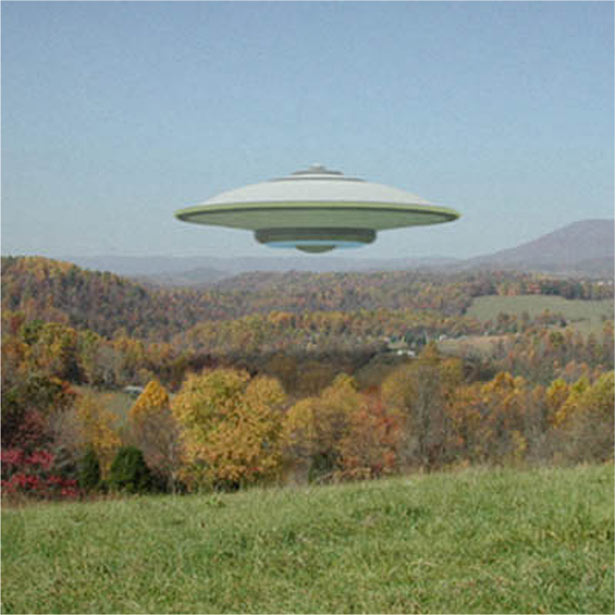
          We don't know who the aliens are nor do we know anything about their behaviour. But one thing is certain that, if aliens exist and they do give us a visit then every thing will change for the good or bad.