Showing posts with label Influence. Show all posts

29 Feb 2012

Why India must work on its Foreign Policy

Given the status that India currently enjoys in the diplomatic world, it is only natural that India be required to make tough decisions.
The diplomatic power of a country can be analysed by simply taking together factors that act for and against the state at the international level and the state's ability to work out a plan to balance out the negatives that it may face. United States can be considered to be a country that is more or less able to balance out the negatives at the international level (recent 'stand-off' with Russia and China on the Syria and Iran issue can be considered to be a negative that it hasn't balanced out in the UN). 

If we look at India under the same lens, then a couple of inconsistencies do crop up which are common in countries which are still developing their diplomatic power (i.e focus more on the soft power). One of the major  problems that the current foreign policy of India has is the inability to move out of the neutrality sphere. 

After the end of the Cold War, the diplomatic world underwent a period of 'secondary power vacuum' wherein, the west was able to take major decisions without being challenged in a manner that would threaten its dominance in the diplomatic world. Yet soon countries like Russia, China and India caught up and three together are no able to form a major opposition to the west at the international level.

Thus while the three are able to form a formidable opposition, India's foreign policy still hasn't evolved enough to take a stand with one side and through out the course of the event remain on the same side. One of the major example of this would be the recent decision by the Indian government to send a diplomat to attend the Friends of Syria meet which is considered to be an anti-Assad and a pro-change forum. This decision has certainly raised a few eyebrows towards the effectiveness of the Indian bureaucracy and government in formulating a foreign policy meant for the long term.

While at the same time, this can be considered to a successful practice by India of its principle-based foreign policy. However such a practice cannot be considered to be an exactly ideal path to follow at the international level and thus a certain reworking of the foreign policy is in order as India tries to analyse the pro-cons of its relationship with various countries in this every changing world.

10 Jul 2011

Taxing Religious Institutions in India

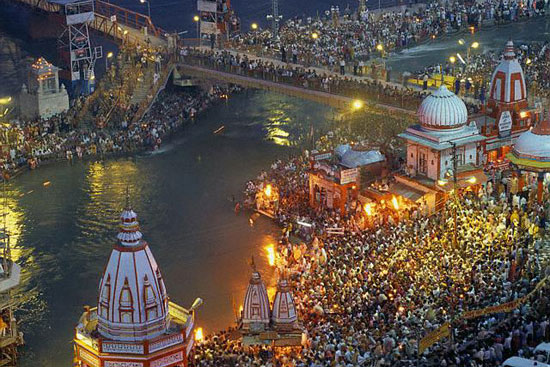
For long the government of India has followed a policy of providing subsidies for religious events be it the Haj or be it the Kumbh Mela. For the Kumbh Mela it is more about providing the infrastructure but its the same thing. Recently while reading a blog, I read that every year the govt of India spends more then Rs 600 crore as Haj subsidies. That is so not good. Its vote bank politics at play, a very common thing in India but not a good thing. And if we take a look at the Kumbh Mela then it is a lot more considering the amount of infrastructure the government builds for the event. So all in all is this an unnecessary waste of our hard earned tax money?


Source
      There is no clear majority on this as some people say that it is a waste while the others support these subsidies and in fact have even urged the government to increase them. I for one am against them. What I believe is that in case of the Haj, the Muslim law states that each person must complete this journey to Haj on his own and using his own resources. Thus to many Muslims this subsidy that the government provides is insulting as it is against that law and I support them if they feel so. Because if such a journey has to be made, then to keep it pure, the individual must exclusively use his own resources and not depend on others. 


      In case of the Kumbh Mela or Amarnath Yatra for that matter. I feel that the government should not heavily invest in infrastructure for short term events like these as they happen at one place and then at another. Thus there is no productivity in it. Besides I feel that the amount of money that the government has spent on such holy pilgrimages would have been enough to develop another Bandra-Worli sea link located in Mumbai and a lot more. But that hasn't been done. The money that the tax-payers earn after having slogged in whether it is their office or in their shops or any place for that matter is being used for this. Of course, if one talks about security then yes, the state must take care of the security issues but that must be the only expenditure made by the state in this regard. The infrastructure that needs to be developed must be developed by the religious bodies which organise these events as they are after all religious institutions established to aid and help every devotee and individual to make their respective pilgrimages. They must not act like profit guzzling private sector institutions.


Source
      Another thing that I'd like to talk about would be the Taxation Policy of the Government of India in regards to Religion which states that all organisations set up for religious purpouses shall be exempt from taxation. I do not agree with this clause that is there in the India Tax Act, 1961. What I do not understand is why is it that common people like me and you who work hard and do some good with it are taxed and while religious institutions which hardly ever function to do what is demanded of them are not taxed. If you look at it from a numerical point of you then I can say that the religious institutions are the richest in the country. The best example is a temple which has got gold ornaments for the god that resides in that temple. Thus it is quite foolish to tax us who have limited income and not them who have an unlimited income.


      Of course some people might raise the point that religious institutions are many a times charitable in their deeds. They open up schools and hospitals but I would like to ask if whether it is certain that all do that? And if the money from their charitable endeavours if I may say so ever even reaches the needy. If they are engaging in charitable activities and if that has been verified by the government then it is good, they should be given some tax benefit. But while talking about religion and charity, I can't help but bring up the topic of a recently deceased 'saint' who was supposed to be engaged in charitable activities and how his death resulted in a major public figure being caught crying on camera but what I really mean to say over here is that even though he may have been indulging in charitable activities but then why are trucks being ceased with millions of rupees going out from the city of his residence?


      Is there something else that we are not seeing that is there in all of this tamasha, if I may label it that. I won't get into whether there was something more or not for the simple fact that there is nothing to explain. The picture is crystal clear. Something was going on if truck loads of money is being transported from one place to another. However what I would like to point out is that according to the India Tax Act, 1961, all anonymous donations can be taxed till the marginal rate of 30%. And if the income is about 5% of the total income of the institution then it may not be taxed. I think that it is a rather surprising clause.

      It is common sense that if a person wants to convert black money into white money then he will donate it to some institution specifically religious or charitable and then cut a deal with the owner and he will get his money white and part of it will go into the pocket of the chairperson or owner of the institution. And not to forget that what I mentioned above is not application to places of worship like temples, churches or mosques. Thus I think it is a loophole that can be easily exploited. Religious institutions however sacred they are must never interfere with the functioning of the state but yet at the same time they must pay their dues (taxes) like any institution located in the state. People may say that if they are being taxed then they have a right to their opinion and all but according to me religious institutions with huge followings should not make any statements regarding the administration of the state or the policies followed by the state for the simple reason that even they may have meant it in goodwill but people in trying to implement that 'goodwill' might not remain within the civil boundaries that the constitutions marks for the citizens of the country.

Source
      And the last point that I would like to raise is about the recent treasure worth Rs 1000 lakh crore or about $22 Billion which was found in a temple in Kerala and the ongoing debate regarding the ownership of the treasure. Many devotees have said that the treasure belongs to the temple but I would like to ask them what use is treasure to a temple? Gods have always been against materialistic desires and thus speaking from a devotee's point of view I think that it is an insult to them. And another thing is that even though the treasure was found in the temple but it belongs to the people of India and thus the government should at the most give the temple the founder's share or 10% of the total worth of the treasure which is not a small amount and the treasure should be hosted museums because it is the property of the people. Now if people start questioning ownership on the basis of religion then I will like to remind them that many Hindus like me are not in favour of a treasure being kept in a place as sacred as a temple and the treasure also belongs to us and thus it is public property and hence should be housed in a museum.

      Thus all in all, religion and money are not a good combination although they are a dominant combination for the simple reason being that religion no matter what it is was always meant to be sacred and pure and this introduction of money into the sphere of religion has spoilt that purity that it enjoyed previously while at the same time giving rise to corruption and if I may say insuring that the government losses money. Thus money and religion should be kept separate otherwise there will not be difference between them and the profit-making private institutions. In the end, I would like to just say that this article was not meant to criticise anybody and that it was only meant to shed some light on many facts that people are not aware of. Hence this article should not be taken in the wrong sense.

19 Jun 2011

The Concept of Clean Politics

Source
      Politics has always been a key element of our society. Without it, it would be hard to even establish whether a society even existed or not. Its a concept that is said to be as important to society as oxygen or water is to mankind. Everything that has ever defined us and the world that we live in has been influenced by this eight letter word. On the one hand it started two world wars and on the other insured the peaceful settlement of the Suez Canal dispute. So now that you come to see of it, politics is morally colourless i.e it can result in wars or solution of disputes peacefully.

     The concept of politics became famous thanks to Shakespeare and his play Caesar. I was taught the play in tenth standard and it was also my first brush with this concept. Since then the concept has fascinated me. It is so intriguing that you can achieve so many things with this one word and its careful usage. Its a tactician's dream. For ages people have planned and conspired against each other, no wonder the world is in shambles today. We have to deal with multiple threats like terrorism, rival countries and a relatively new concept known as rogue countries which I can use to describe the failed state of Pakistan which uses a dual policy. One that is anti-terrorism and the other pro. Of course it is a hide and seek game to prove the latter.

Source
      So has politics ever been clean or has it always involved those small dirty tricks that seem to be white on the outside and black like a kettle on the inside. It is confusing while at the same time we have the answer in front of us. It is like asking whether a man has ever lied in his life. Now we don't know about everyone but we can make the most likely assumption that every man has lied in their life at least once. And so it is. We take two possibilities and choose an option that is more likely and that is that politics had been a dirty business since the very start. And there is no better example to start with than that of Caesar himself.

      Caesar was murdered because he was becoming too big. He was overshadowing others and was starting to seem like a threat. Thus he had to be done with and so he was murdered, murdered by his most trusted comrades, Caesar's story went onto become epic. However there is one thing that is worth a mention here. As we see that as Caesar became powerful, the number of his enemies also increased and this is true to every individual who rises high and has a massive public support system. So he was murdered for political gains and thus it proves the fact that since ancient times politics has been a dirty business.

Source
      We are further convinced of this when we look at the recent examples of Libya and Syria. I have explored Libya in a previous post and thus I won't be discussing it and instead I would take Syria as an example. Syria has been a dictatorship for a long time and it's people have been denied their rights for a long time. Hence it was quite natural that a tipping point be reached and thus at this tipping point the public anger overflowed from the pot. Widespread stirs and agitations took place and they were put down. The authorities used every resource that they could to fight the very same people whom they were meant to help in their quest for progress. Its a tragedy if you look at it closely.

      So we have the answer that we wanted. Yes politics has always been a dirty business. Always some interests are involved. But does it mean that this black and white picture of politics can't be given a make over and turned colourful like the rainbow maybe. Well I would say that this black and white picture can't be turned into a rainbow-colourful but it certainly can be lightened. Colours can be added and the baggage attached to the word 'politics' can be lost. But it doesn't start just like that. No one individual can do it. It has to be a community's work. It is like a society garden. Everybody needs to plant the seeds, water them and take good care of them if flowers are to bloom and happiness to come.

      How can one do it? Well it is simple. Grab your paper and get your pen, and pen your worries on it. Just direct your feet to the sunny side of your mind. I took that line from a song but how does it matter, the message goes out loud and clear. It means that you should write what worries you. Put it down on a piece of paper while at the same time suggest things or steps that can be taken to improve the situation and that would be you doing your bit. So as I finish this article I look at my TV screen and see the farmer agitation and I hope that I can do something about it. With that hope I shall again take to my laptop and pen another article but till then this is me signing off and hoping that things come out well.

29 May 2011

Psychology of Views and Decisions

      What is the routine that you wake up every morning to follow? I bet it involves reading the newspapers. Sure it does. What are you nodding your head for? OK? So you open the papers and what is the first news that you read? Killings, rape and violence. In simpler words it is all the things that the world would be better without and also that you would be better without every morning. After all it is much better to wake up every morning to read happier things. But do the papers realise that? I don't think so.

Source
      Regularly they feature events that are not so pleasant to either the eye or the emotions on the front page and we like the silent people read them, go through them and the worse it is the better. At times it seems like we have been taken over by a sinister evil that wishes to see all the gory details so brilliantly highlighted in the newspapers. We do not have any control over it.

      But how did it grow so big in the first place that even our superior organs like the brain can't overcome him? Well it is simple now that you ask. It has grown. All the rubbish that we fed it acted like nutrients for it and it bloomed. There are few things in this world and life that we can do.

      And it is these things that we do that define us. Also there are those things that we don't do that define us. As such we are surrounded by options, options good or bad. However what we need to look at is: what is it that we have done and or will do and what would their consequences be? Can they be put into the 'good' circle or the 'bad' circle.

      Whatever we do may not have its effects immediately but it will in the future, you can be sure about that. Thus every time we do something or decide to do something just give it a second's thought and view all the paradigms attached to it. That is all you need to do to lead a good life. Once you have analysed everything, you will choose the right option automatically.

13 Jun 2010

The Complicated Indo-Sino Relationship Part II

The Indo-Sino relationship has been improving steadily but there are certain things that might become a hurdle in the near future. China as the world knows befriended Pakistan to counter the Indian influence. Now that such a lot of time has past, the two a become the closest of buddies. China won't go against Pakistan on any topic at the international level. And India and Pakistan don't have a great history together.


China's continued support to Pakistan might hinder this friendship process that has started between these two great nations. Pakistan which India believes sponsors terrorism and it does has many a times escaped thanks to the United States which has vested interests in that region or thanks to China which is its great ally.


Another issue that might cause misunderstanding between the two nations would be their stands on nuclear weapons. China has a huge arsenal and this is bound to make India uncomfortable. If such a thing ever happens then it might lead to a nuclear arms race which would be the worst thing to ever happen.

Influence is a major hurdle that separates these two countries from being big time allies. This has many a times happened between the US and UK but not to that serious an extent. However, India and China share borders. This is a major problem because if they didn't share borders and had been far  away from each other then their area of influence would not cross into the other's. But being neighbours, this is bound to happen. It is already HAPPENING.

TO BE CONTINUED...