Showing posts with label Economy. Show all posts

10 Oct 2011

The Era of Poker Diplomacy


The world political scenario can at any given point of time be viewed as a game of poker – with a difference. The participants (countries) are playing not for money, but the ability to influence decisions at a regional as well as global level. For long the players have been recurrently changing with each player being replaced by a new one. Thus there is a constant continuity in this whole cycle along with greater participation by different countries which prevents an unrivalled uni-polar system from being established.
Since the Soviet Union’s fall, world diplomacy has been entirely dominated by the Western Hemisphere. As true as this fact may be, an entirely different situation is unfolding right before us. With the US Budget Deficit crisis continuing, it’s expected that Uncle Sam might replace its expensive military programs with a new policy which excludes active US involvement during a crisis.
For starters, US has been giving pro-active assistance to rebel groups in enemy states like Iran. Modern weaponry is being supplied to nations like Saudi Arabia in the middle-east as advance policing fee for the region when USA exits from Iraq. Critics of this theory highlight the increased US involvement in Pakistan as a counter theory but the fact remains that this involvement of the US is not at a proactive level. This role that the US is trying to fit itself into is that of an observer state. To maintain its domination while staying an observer state, it must forge excellent relations with the countries that counter-balance its enemies - and one of the biggest threats at the moment for Uncle Sam is the growing clout of the People’s Republic.


What constitutes the pot?


Accumulating absolute power is often the reason for these ‘international’ poker games. Migration, an international economy that is in danger zone and acquisition of arms by both legal and illegal entities are crises faced by modern nation states. Enhanced awareness of human rights and improvements in the regional as well as the global economy, political and security scenarios are the only remedy to this problem. These collectively determine the path that a country may take for the acquisition of resources to achieve its ends.
China can be quoted as an example of a state that has adopted an active-aggressive approach in order to address its ends. This hypothesis is based on past positions adopted by the Chinese government on various issues like Chinese claims of ‘indisputable sovereignty’ over the South China Sea, treatment of citizens of Jammu and Kashmir and incursions by Chinese troops beyond its borders. All these actions have directed negative attention on China and disturbed policy-makers in distant countries. Of the various solutions devised, none seems as effective as portrayal of India as a counter balance.
In order to counter the Dragon, the Indian Elephant is being portrayed as the future global power. This has led to certain questions that have certainly puzzled the western policy makers and have even started to baffle them (read the Copenhagen scenario). The question that is being repeatedly asked is: Is the West trying to push its luck a bit too far by pitching India against China?


Playing a bluff a little too often?


“The most likely scenario is that of a competitive relationship, unbuffered by extensive economic ties, but without a significant possibility of armed conflict.” (Frankel and Harding, 2004)
Despite being pitched against each other repeatedly, the two Eastern giants have also come together to act as a counter balance against the US. This counter balancing act practiced by India and China is based mainly on issues of development and environment with respect to the developed and developing country differences. Thus as the western hemisphere retreats, the two Asian giants have started following their respective policies in order to generate a clout for themselves.
China has followed a policy of what is known as ‘flexing their might’ which involves showing off the military strength of the country and thereby subduing the opponents. They are doing it in a manner which has caused some brows to sweat in Washington DC, New Delhi and even Tokyo. The rapid Chinese military build up along the borders is seen as an act of aggression. Some neighbours try to counter it, as in India’s case by bolstering the military capabilities while countries like Japan approach Washington for support where they are given the same reassurances of assistance in case of a crisis.
However, “South Asian states are concerned about the fallout of a potential conflict between the Unites States and China if Beijing becomes more assertive or Washington decides to adopt a more aggressive containment policy towards Beijing.” (Cooney and Sato, 2009) The Dragon perceives its aggression only as a precaution against encirclement by the US and its allies. Almost all countries neighbouring China have some form of close ties with NATO (a major US ally). Be it Philippines, Thailand, Japan, South Korea, Vietnam, Australia or India, all share a close relationship with the US with some having a kind of a treaty with the US guaranteeing US assistance during crisis.
Thus it can be said that the Chinese fear of America is not an irrational thought made up by a government which is trying to divert attention from its internal problems. At the same time, the Indian fear is that of a total Chinese controlled South Asia which would be the biggest challenge to achieving a status at par with the US in the future; and India also has its fair share of theories of how the Chinese are expanding their support base.
The present Look East policy of the Indian government seems to lack that excitement which had originally resulted in success. For example, there has been little publicity regarding the work that India is doing in the countries which are a part of the Look East policy. It was only after the Chinese started advancing into Myanmar that the Indian government opened its eyes and stepped up its efforts to reach to the people of Myanmar. However, there’s been very little progress after that. Thus India has been taking a less pro-active stand on how it wants to go about making inroads into other countries except the West and Russia.
Nations close to both India and China have naturally been wary of their ambitions. However, this is more so the case with China as many countries fear the Chinese expansion dream i.e. the Greater China dream and this is where the US comes in. It has given these countries many guarantees regarding their safety.
However, how long will these assurances last?


Which player will call a fold?


As the pot keeps on getting bigger and bigger, the chance of kicking off a row also gets bigger. The important question, however, is: who will be the first to call a fold. A fold in this game has tremendous effects which affect both the political and economic functions of the country. For instance, the demise of the Soviet Union saw many socialist or communist economies shifting to the capitalist fold. Hence, if any shift is to take place, the consequences will be bigger than what they were when the Soviet Era came to an end.
The diplomatic power of a country is vastly affected by the monetary condition of the country. For starters, an increasing budget deficit means that other countries are a little wary of buying its currency bonds which dries up a source of finance to manage unsustainable expense. This results in spending cuts across the board in order to reduce this deficit and regain the confidence of those other countries. Certain departments like Defence are the first to be hit by budget and spending cuts which directly impacts the military might and thereby the arm-twisting strength. Inevitable budget cuts to other areas like Development Aid also reduce the clout of the country as nations shift their allegiance to more generous nations.
The West has been suffering from a self-created economic crisis. The current double-dip recession, for instance, can be attributed to the Bill Clinton Administration. Emerging countries like India and China don’t face such problems. A large amount of sustainable fund will always be easily available to them. Creation of efficient and sustainable infrastructure is the problem they face. Despite credible advances in infrastructure, they still lack sustainability and the problems like the recent China super-fast train crash only add worry.
Another aspect that adds shine to a country at the international level is the respect for human rights shown by the country and the amount of freedom that its citizens have been given. India triumphs over China in this regard, having been recognised by the International Community as a true Democracy. This gives India its fair share of positive light on the International Stage along with the constant pressures of upholding the functioning of democratic institutions in a nation which is becoming home to active participation of citizens in various matters of policy, be it economic or political in nature.
Hence if we were to look at this game of poker in a holistic manner, we can say that the developed countries can still take calls on diplomatic matters only if their internal politics allows them to take significant decisions. At the same time, India and China perform better than their counterparts despite their fair share of problems, provided both are on the same side of the table.
The conclusion of the events down at South China Sea might help us in coming up with an answer to the question India or China but until then, I would as an investor like to invest in both of them equally.
To use Wall Street lingo, one should not expect any gains or losses, but in the long run, as the players revaluate their strategies and come up with the perfect consumer pitch, the sight of the bull and the bear will become common. Till then, let’s allow the speculators to earn their bread.
Thus for the time-being as players work on their strategy and the speculators operate the market, the game stretches on to infinity.


Bibliography

  1. Frankel, F.R and Harding, H, (2004), “The India-China relationship: what the United States needs to know”, Columbia University Press.
  2. Cooney, J.K and Sato, Y, (2009), “The rise of China and international security: America and Asia respond”, Routledge

10 Jul 2011

Taxing Religious Institutions in India

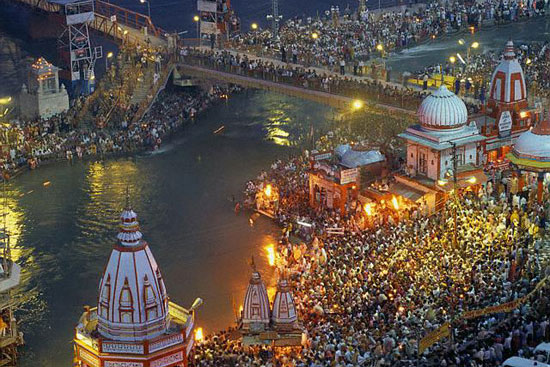
For long the government of India has followed a policy of providing subsidies for religious events be it the Haj or be it the Kumbh Mela. For the Kumbh Mela it is more about providing the infrastructure but its the same thing. Recently while reading a blog, I read that every year the govt of India spends more then Rs 600 crore as Haj subsidies. That is so not good. Its vote bank politics at play, a very common thing in India but not a good thing. And if we take a look at the Kumbh Mela then it is a lot more considering the amount of infrastructure the government builds for the event. So all in all is this an unnecessary waste of our hard earned tax money?


Source
      There is no clear majority on this as some people say that it is a waste while the others support these subsidies and in fact have even urged the government to increase them. I for one am against them. What I believe is that in case of the Haj, the Muslim law states that each person must complete this journey to Haj on his own and using his own resources. Thus to many Muslims this subsidy that the government provides is insulting as it is against that law and I support them if they feel so. Because if such a journey has to be made, then to keep it pure, the individual must exclusively use his own resources and not depend on others. 


      In case of the Kumbh Mela or Amarnath Yatra for that matter. I feel that the government should not heavily invest in infrastructure for short term events like these as they happen at one place and then at another. Thus there is no productivity in it. Besides I feel that the amount of money that the government has spent on such holy pilgrimages would have been enough to develop another Bandra-Worli sea link located in Mumbai and a lot more. But that hasn't been done. The money that the tax-payers earn after having slogged in whether it is their office or in their shops or any place for that matter is being used for this. Of course, if one talks about security then yes, the state must take care of the security issues but that must be the only expenditure made by the state in this regard. The infrastructure that needs to be developed must be developed by the religious bodies which organise these events as they are after all religious institutions established to aid and help every devotee and individual to make their respective pilgrimages. They must not act like profit guzzling private sector institutions.


Source
      Another thing that I'd like to talk about would be the Taxation Policy of the Government of India in regards to Religion which states that all organisations set up for religious purpouses shall be exempt from taxation. I do not agree with this clause that is there in the India Tax Act, 1961. What I do not understand is why is it that common people like me and you who work hard and do some good with it are taxed and while religious institutions which hardly ever function to do what is demanded of them are not taxed. If you look at it from a numerical point of you then I can say that the religious institutions are the richest in the country. The best example is a temple which has got gold ornaments for the god that resides in that temple. Thus it is quite foolish to tax us who have limited income and not them who have an unlimited income.


      Of course some people might raise the point that religious institutions are many a times charitable in their deeds. They open up schools and hospitals but I would like to ask if whether it is certain that all do that? And if the money from their charitable endeavours if I may say so ever even reaches the needy. If they are engaging in charitable activities and if that has been verified by the government then it is good, they should be given some tax benefit. But while talking about religion and charity, I can't help but bring up the topic of a recently deceased 'saint' who was supposed to be engaged in charitable activities and how his death resulted in a major public figure being caught crying on camera but what I really mean to say over here is that even though he may have been indulging in charitable activities but then why are trucks being ceased with millions of rupees going out from the city of his residence?


      Is there something else that we are not seeing that is there in all of this tamasha, if I may label it that. I won't get into whether there was something more or not for the simple fact that there is nothing to explain. The picture is crystal clear. Something was going on if truck loads of money is being transported from one place to another. However what I would like to point out is that according to the India Tax Act, 1961, all anonymous donations can be taxed till the marginal rate of 30%. And if the income is about 5% of the total income of the institution then it may not be taxed. I think that it is a rather surprising clause.

      It is common sense that if a person wants to convert black money into white money then he will donate it to some institution specifically religious or charitable and then cut a deal with the owner and he will get his money white and part of it will go into the pocket of the chairperson or owner of the institution. And not to forget that what I mentioned above is not application to places of worship like temples, churches or mosques. Thus I think it is a loophole that can be easily exploited. Religious institutions however sacred they are must never interfere with the functioning of the state but yet at the same time they must pay their dues (taxes) like any institution located in the state. People may say that if they are being taxed then they have a right to their opinion and all but according to me religious institutions with huge followings should not make any statements regarding the administration of the state or the policies followed by the state for the simple reason that even they may have meant it in goodwill but people in trying to implement that 'goodwill' might not remain within the civil boundaries that the constitutions marks for the citizens of the country.

Source
      And the last point that I would like to raise is about the recent treasure worth Rs 1000 lakh crore or about $22 Billion which was found in a temple in Kerala and the ongoing debate regarding the ownership of the treasure. Many devotees have said that the treasure belongs to the temple but I would like to ask them what use is treasure to a temple? Gods have always been against materialistic desires and thus speaking from a devotee's point of view I think that it is an insult to them. And another thing is that even though the treasure was found in the temple but it belongs to the people of India and thus the government should at the most give the temple the founder's share or 10% of the total worth of the treasure which is not a small amount and the treasure should be hosted museums because it is the property of the people. Now if people start questioning ownership on the basis of religion then I will like to remind them that many Hindus like me are not in favour of a treasure being kept in a place as sacred as a temple and the treasure also belongs to us and thus it is public property and hence should be housed in a museum.

      Thus all in all, religion and money are not a good combination although they are a dominant combination for the simple reason being that religion no matter what it is was always meant to be sacred and pure and this introduction of money into the sphere of religion has spoilt that purity that it enjoyed previously while at the same time giving rise to corruption and if I may say insuring that the government losses money. Thus money and religion should be kept separate otherwise there will not be difference between them and the profit-making private institutions. In the end, I would like to just say that this article was not meant to criticise anybody and that it was only meant to shed some light on many facts that people are not aware of. Hence this article should not be taken in the wrong sense.

26 Jun 2011

Master of Disguises

Source
      The critics have dubbed it a Failed State, the security agencies have named it a Terrorist State and the human rights activists have called it a Military State. So many names for one state of Pakistan. Well that is certainly the result of the many disguises that the Pakistani agencies work in. No need to say what half of them are. Yes they are some terrorist outfit plotting their attacks on innocent civilians from at times ISI safe houses. So what is it that has happened? Has Pakistan done too much for these terrorists for the terrorists to call Pakistan their home. Well so it seems. However I won't be talking about terrorism on this post. This article is dealt towards understanding the dual policy that Pakistan is following.

      Pakistan has warned the United States against any further drone strikes conducted within its borders and also any unilateral military action taken inside its territory. But is this a farcical show of strength? Is it just a statement issued by the weak civilian government to please the people and the army. The army would be more than happy with that statement because it would help them to get higher budget while at time same time show the public that they still exert influence on the government which it most desperately needs to show due to the rising criticism for them. Thus there are many different angles to this one play that is being stage on the world arena.

      If reports are to be believed than according to them, Pakistan had a pact with USA that if the US finds Bin Laden in Pakistan's territory than they shall be allowed to take unilateral action while Pakistan will be allowed to criticize them and give them warnings just to show the public that they are against such violations of their sovereignty. Now if that is true than I am not quite sure about Pakistan's future as a sovereign country. How can it be that an operation is carried out by another country within the territory of another country and that country doesn't even do anything about it? Because they simply can't. One must not forget the one very important that Pakistan needs at this time and that is 'AID'.

      Almost all the aid that Pakistan gets from the USA is spent on the military but some of it is utilized to keep the economy afloat. Yes, ladies and gentlemen, the Pakistan economy cannot survive long without continuous economic aid from the United States. The reason why the economy is in shambles is because of the negligence of the government. Pakistani Government never invested smartly for the country's future and if you come to think of it they got the most fertile land in the country after the partition.

      However there are certain sectors that are threatening to boycott the US aid but that may just turn out to be nothing but a publicity stunt being done by an extremist candidate up for elections. If the military is mum and not doing anything about it than there isn't much that can or will be done. And as time goes, the Pakistani people will forget about the incident but the extremists and the terrorist funded by the ISI will not. Thus the ongoing proxy war against the US planned and put into action by Pakistan will go on.

      So in short they can't do much except criticize the US and fund terrorist networks to increase attacks on Americans because after all money talks. So in short we will only be hearing statements made by the Pakistan leadership and acts of terrorism against the US and that is all that there is to it. After all statements can be forgotten but actions cannot and the US is one country that will never forget it if Pakistan does something against them. So in the end, it is the "you give me money, and I won't do anything 'publicly'."

11 Jun 2010

The Complicated Indo-Sino Relationship Part I

India and China are the most important nations of the 21st century. They are the rising superpowers. But both have their own respective problems that pull them down. Both these nations will have a powerful say in the world affairs sooner than later. It is already happening. The recent Copenhagen Summit where India helped China in getting a good and fair deal. Such incidents are increasing, where both these nations have taken surprising steps sometimes supporting each other and sometimes against each other. This is what makes the Indo-Sino Relationship so complicated.

Both these countries have a history. There is a lot of mistrust between the two countries which is evident from the fact that they don't trust each other and always view each other with suspicion. This all started due to the 1961 war, when India and China were at war with each other. There are many versions as to why the war was fought but somewhere down the line it is clearly visible that these two nations are a little vary while dealing with each other which has resulted in centuries of mistrust. But why so?

The main reason for all this lies in economics and foreign affairs. Both these countries are going to be superpowers sooner than later and like all the countries in the world, they also would have some differences in opinions regarding various matters. This is quite the case here. Both these countries have huge differences in opinion. Lets take Pakistan for example, China is considered to be an ally of Pakistan which is quite true. China has always supported Pakistan in many of its "misadventures" be it the nuclear weapons race or preventing sanctions. India on the other hand is considered to be an arch-rival of Pakistan. This assumption is mainly based on India's stand on various issues which are sometimes against Pakistan but India has also supported Pakistan, but that is a different story all together. The fact is  that this varied opinion is a major problem in improving the relation between the two nations(India and China).

Another factor is the race. The race for  supremacy which I believe is very much the main problem. Both these countries want to outdo each other in every field. India wants a UNSC seat which I believe is very much India's right because India does not have a big brother(like China for Pakistan and USA for Israel) with a UNSC and besides it has earned. India is the most powerful country in the Indian subcontinent. This is a major problem for China because as long as China has a hold on that seat it will be a big brother type figure in Asia but with another asian country also getting that seat, the big brother image is bound to take a beating and so will its influence.

But this was all about the negatives shared by the two countries. Positives are also there. Both these countries have realised that though they may be powerful nation but it is still not enough to overcome the US supremacy. This resulted in the two forming an alliance of sorts at the Copenhagen to get the result that they both wanted. This played the trick. India and China are so powerful nations that when together even the US can't impose its policies and ideals on them. The duo agree on many matters like terrorism. But this is still not enough. A lot more should be done to improve the relations.

India recently gifted a replica of Sanchi Stupa to China. Such acts are the most welcomes as they help in improving relations between the two countries. This improvement in relations might lead to a new era of diplomacy wherein both India and China to help and support each other in their own various endeavours. The time has come when these two nations will join hands and change the vary face of International Politics.

TO BE CONTINUED....

THIS POSTS CELEBRATES THE IMPROVEMENTS IN THE INDO-CHINESE RELATIONSHIP.